
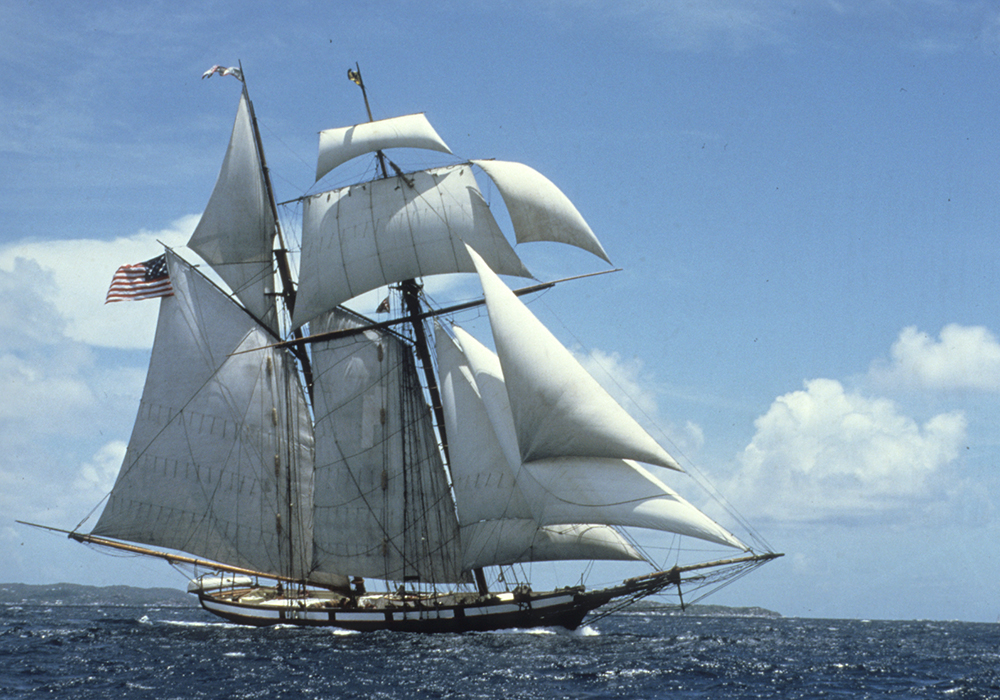
Pride of Baltimore
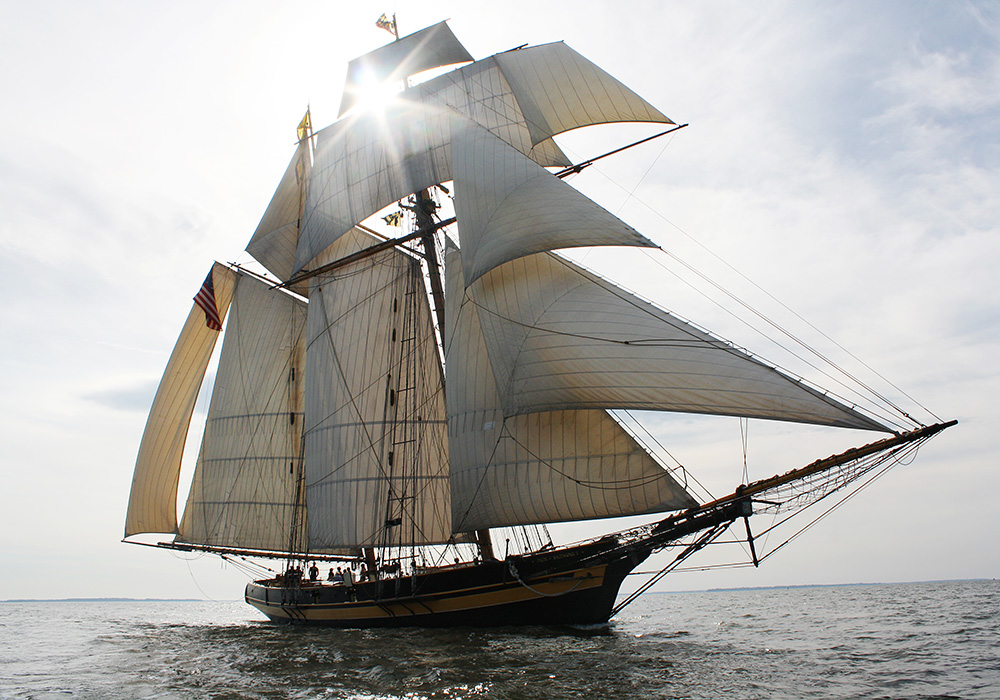
Pride of Baltimore II
While both vessels were inspired by the swift Baltimore Clippers of the War of 1812, they were designed with different objectives. The original Pride of Baltimore was conceived as a historically accurate static replica that was later adapted for the extensive voyages she undertook. Pride of Baltimore II was designed from the outset as a faithful sailing reproduction that also meets modern safety standards and passenger-carrying regulations, resulting in several important differences.
- Pride of Baltimore II is approximately 50% larger by volume and about 15% larger in overall dimensions than the original Pride.
- The original Pride had no watertight compartments below deck. Pride of Baltimore II features six watertight bulkheads, three of which are fitted with watertight doors, significantly enhancing safety.
- The original Pride was initially fitted with hammocks for crew accommodations and later converted to bunks. She also had only five feet of headroom below deck. Pride of Baltimore II provides full standing headroom throughout much of the accommodation spaces, permanent crew bunks, and three passenger cabins amidships that accommodate up to six guest crew members.
- The original Pride carried approximately 40 tons of internal ballast consisting primarily of encapsulated slag-metal ballast with a layer of cobblestone. Pride of Baltimore II carries 60 tons of lead ballast. 40 tons internally. 20 tons external. The greater density of lead and its reduced volume creates lower center of gravity hence maximum stability.
- The original Pride was powered by a single Caterpillar diesel engine capable of driving the vessel at approximately 5 knots with a range of about 600 nautical miles. When launched, Pride of Baltimore II was equipped with twin Caterpillar diesel engines and twin screws, providing speeds of up to 8 knots under power for extended periods. In 2026, those engines were replaced with twin Cummins diesel engines that are quieter, more compact, more fuel efficient, and provide increased power. Today, Pride of Baltimore II has an under-power range exceeding 1,200 nautical miles.
- The original Pride featured a white gunwale stripe and white pennant. Pride of Baltimore II is distinguished by her yellow gunwale stripe and yellow pennant.
- The original Pride was equipped with radar, LORAN, and other electronic navigation equipment. Today, Pride of Baltimore II utilizes modern radar, GPS, AIS (Automatic Identification System), electronic navigation charts with paper chart backups, and Starlink satellite communications, providing both internet and telephone connectivity while underway.
On deck, Pride II looks very much like Pride except that she is steered by a wheel rather than a tiller. Her sail plan is also similar. She looks and sails like what she is — a refined Baltimore Clipper topsail schooner. She would make the most jaded 19th-century ship builder proud.