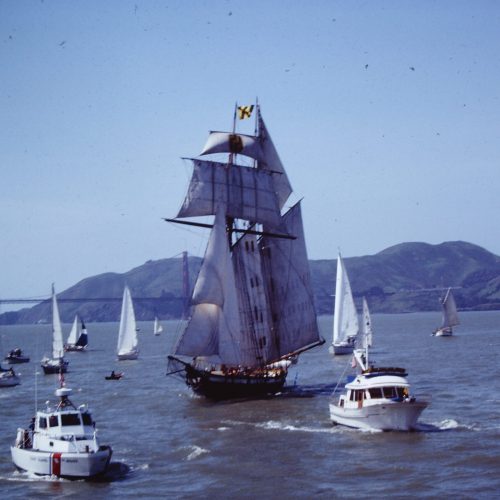
As we continue our weekly journey through 50 Years of Pride, we do so at a remarkable convergence of history. In 2026–2027, several milestones come together in what is truly a once-in-a-generation moment: the 40th anniversary of the loss of the original Pride; the restoration and rededication of the Pride Memorial at Rash Field; America’s nationwide 250th anniversary celebrations; and the 50th anniversary of the vision that launched Pride’s enduring legacy. Against this backdrop, each chapter offers not just remembrance, but renewed purpose.
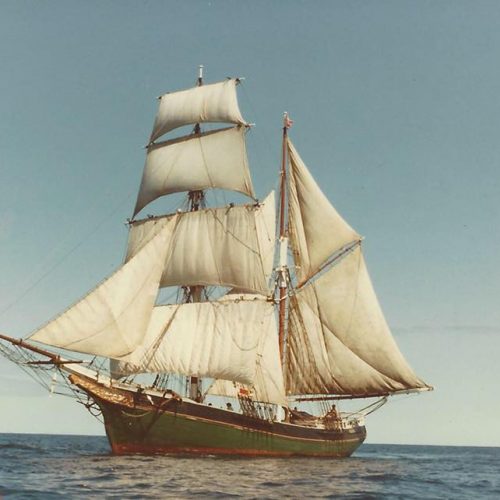
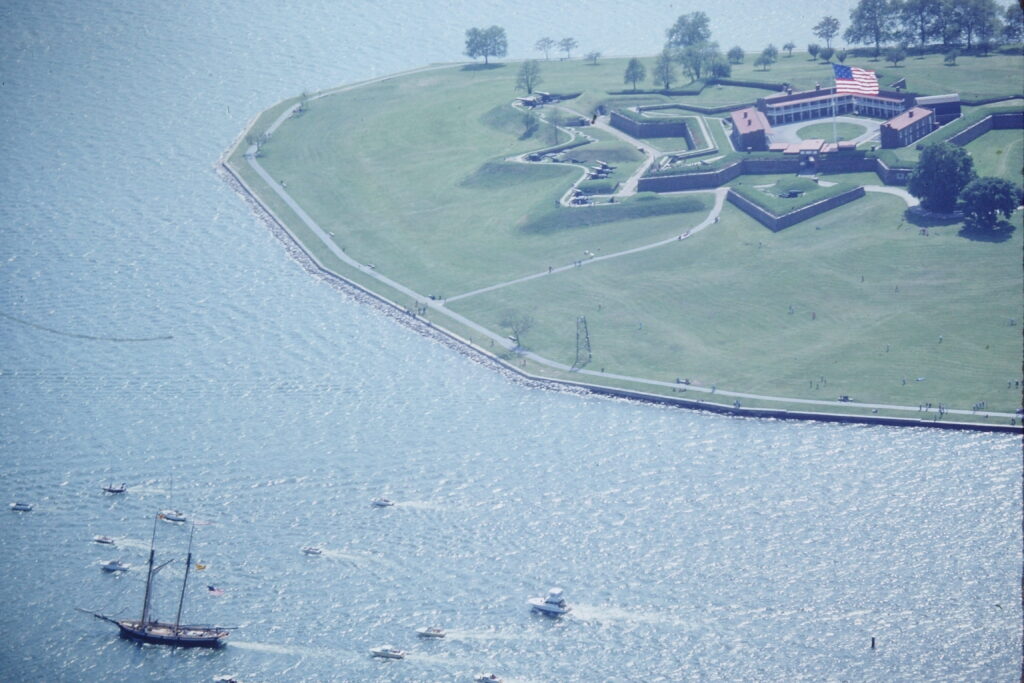
On May 1, 1977, Pride of Baltimore was commissioned. In keeping with maritime tradition, her colors were hoisted, orders were given by Mayor William Donald Schaefer, and the first entry was made in her log. Later that same day, she embarked on her maiden voyage to Bermuda.
The first log entry read:
“I, William Donald Schaefer, Mayor of the City of Baltimore, do hereby officially commission the ship Pride of Baltimore and call upon her and her crew to represent Baltimore and its citizens. Godspeed an may your voyage be a safe and prosperous one.”
Following the commissioning ceremony, the ship departed Baltimore and her home waters of the Patapsco for the first time. She reached as far as St. Michaels before an early challenge revealed itself: the ship’s natural-fiber rigging had stretched. Captain Smith made the call to rerig the vessel using steel cable clad in synthetic rope before continuing on.
Peter Boudreau later recalled the moment when the ship truly came alive under sail:
“The first puff of wind the ship ever felt — the first real puff — was in the lower Chesapeake on the way to Bermuda. The sun was just coming up over the Eastern Shore, and I was on the dawn watch. She heeled and simply took off. I think we all — the builders and crew — woke up to see. We stood on deck and watched the rig and the hull go through its first real test. I will never forget that moment.”
On May 8, during the vessel’s first full day back on the Bay, deckhand Patrick Smyth (not to be confused with our current staff member, Patrick Smith) was injured while tightening the rigging and was airlifted ashore by a U.S. Coast Guard helicopter. The maiden voyage proved demanding, and Pride ultimately arrived in Bermuda three days late.
That summer, Pride sailed to Halifax, Nova Scotia, and several other East Coast ports, including New York. While there, she was recognized as the vessel with the most character — a distinction noted both during the awards ceremony at United Nations Plaza and in a favorable report by The New York Times.
It was also during this tour that Pride was fully rigged with her square-topsail. Naval architect Thomas Gillmer later reflected:
“The first impact of this near completion of her historic rig was in her appearance. It also made a notable difference in her sailing capability — more than I had anticipated.”
Gillmer described much of the ship’s earliest service as “undistinguished,” save for one memorable lifesaving episode: the rescue of a “mongrel dog” from New York Harbor. Affectionately named “Deeogee”, the dog became the ship’s mascot, serving aboard for eight years before retiring to a home ashore (sorry, we don’t have a photo of the dog).
We hope you are enjoying these weekly instalments. Tune in next week for part seven.