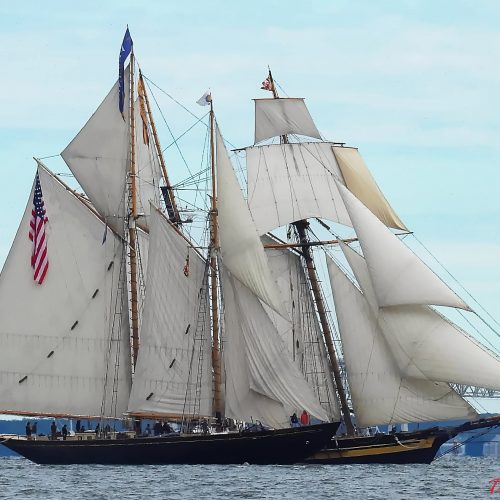
As part of our ongoing 50 Years of Pride series, we’ve spent the past several months looking back at the story of the original Pride of Baltimore, from the vision that inspired her construction through her rise as an ambassador for Baltimore and the State of Maryland.
That chapter of the story came to a tragic end on May 14, 1986, when Pride of Baltimore was lost in a microburst squall while returning home. Four crew members lost their lives: Captain Armin Elsaesser, Vincent Lazzaro, Barry Duckworth, and Nina Schack.
But the story of Pride did not end there.
As we continue this series, we shift from the story of the first vessel to the broader story of Pride itself: the public mandate to rebuild, the birth of Pride of Baltimore II, and the nearly four decades of sailing, storytelling, and goodwill that have followed. In the weeks ahead, we will continue telling the Pride story, sharing moments from our archives, revisiting Pride II‘s travels, and highlighting the many people whose vision, dedication, and hard work transformed a single ship into a lasting legacy that continues nearly five decades later.
In the days and weeks that followed the tragic loss, something remarkable happened. Donations began arriving almost immediately. Checks were mailed to the office, schoolchildren sent jars of coins, and local tv and radio stations helped rally support. More than $200,000 was donated toward building a successor vessel. In many ways, it was a public mandate. Baltimore and Maryland wanted their Pride.
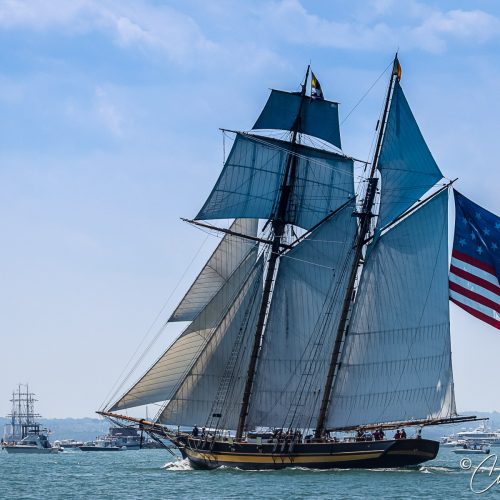
By the summer of 1986, momentum was building for a new ship. While some proposed entirely different designs, the decision was ultimately made to build another Baltimore Clipper. The new vessel would be named Pride of Baltimore II. Naval architect Thomas Gillmer was selected to design her, and master shipwright Peter Boudreau was chosen to oversee her construction.
Those involved agreed that the new vessel should build upon the success of her predecessor while incorporating lessons learned. She would be larger, capable of carrying passengers under Coast Guard certification, and have greater cruising range under both sail and power. Most importantly, she would continue the mission that had made the original Pride such an effective ambassador for Baltimore and Maryland.
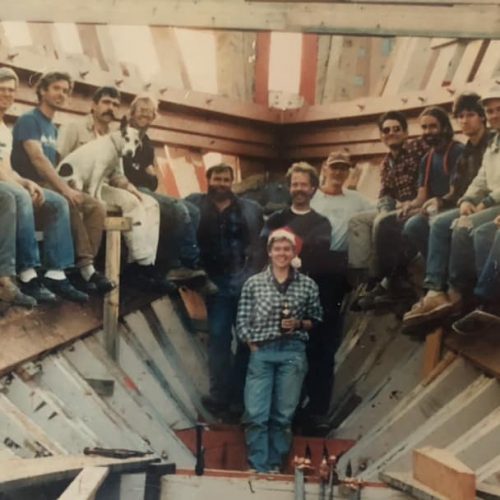
In early March 1987, a shipyard once again came to life on the shores of Baltimore’s Inner Harbor. On May 5, 1987, Pride of Baltimore II’s keel was laid before a crowd of Baltimoreans, elected officials, sponsors, members of the press, and former Pride crew who traveled from across the country to attend. Visiting vessels, including the Danish training ship Danmark and the schooner Western Union (then sailing as New Way), added to the occasion.
As dignitaries and supporters drove ceremonial drifts into the blocking beneath the keel, a large sign hanging from the shipyard shed captured the spirit of the project:
“Pride of Baltimore II, from the people of Maryland to the people of the world.”
The loss of the first Pride was a tragedy. The decision to build Pride of Baltimore II was a testament to the determination of a community that believed her mission was too important to end.
I hope you are enjoying our ongoing 50 Years of Pride series.
In our next installment, we’ll begin exploring the construction of Pride of Baltimore II, the shipwrights who built her, and the crew who brought her to life.
Cheers,
Patrick