Skip to content
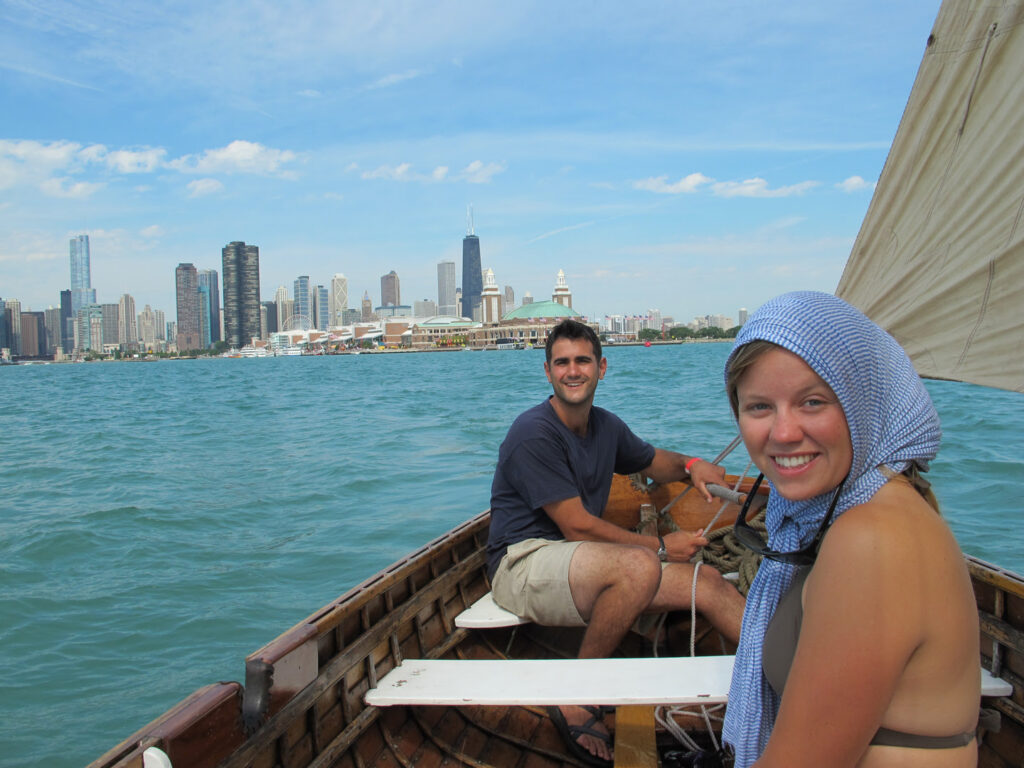
Pride II crew Andrew Kaiser & Barb Krasinski sailing Chasseur in Chicago, 2011.

50 Years of Pride Part 24: The Small Craft of Pride

“Believe me, my young friend, there is nothing—absolutely nothing—half so much worth doing as simply messing about in boats.”

— Kenneth Grahame, The Wind in the Willows (1908)

Dear friends and fans,

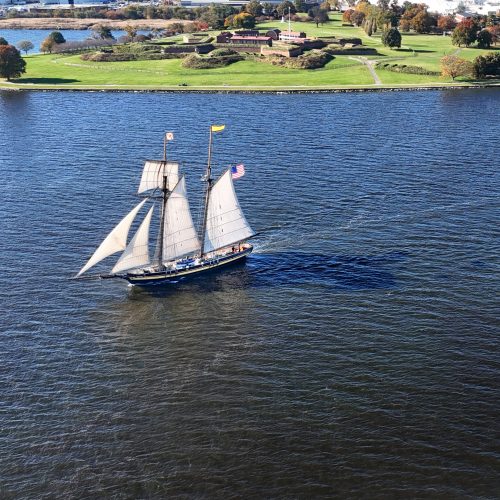
Sometimes the smallest things tell the biggest stories. For 50 years, Pride of Baltimore has carried the traditions of Chesapeake Bay shipbuilding and seamanship to ports around the world. Along the way, the small boats that accompanied our ships have played their own important roles, reflecting the ingenuity, craftsmanship, and spirit of the people who built and sailed them. Their stories are part of our living maritime heritage, and part of what makes Pride so special.

This week, our 50 Years of Pride blog takes a closer look at Chasseur, Pride of Baltimore II‘s small boat, while also looking back at the small boats that served the original Pride of Baltimore during her nearly a decade sailing for Baltimore and Maryland.

This installment would not have been possible without the help of Captains Jan Miles and Peter Boudreau, as well as crew alumni Leroy Surosky and Christopher Rowsom, photographer Greg Pease, in addition to Mike Mefferd, the boat builder who constructed Chasseur in our shipyard in 1988. We’re grateful for their knowledge and recollections in helping tell this part of Pride’s story.

A special hat tip to Pride II crew alum Peter Bolster for the idea to tell this story, and to the Galveston Historical Foundation for helping us uncover additional newspaper coverage from Pride II‘s 1988 visit to Galveston.
Chasseur

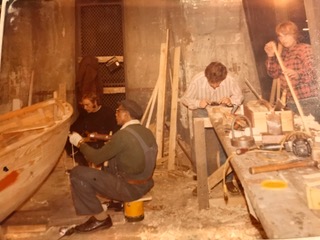
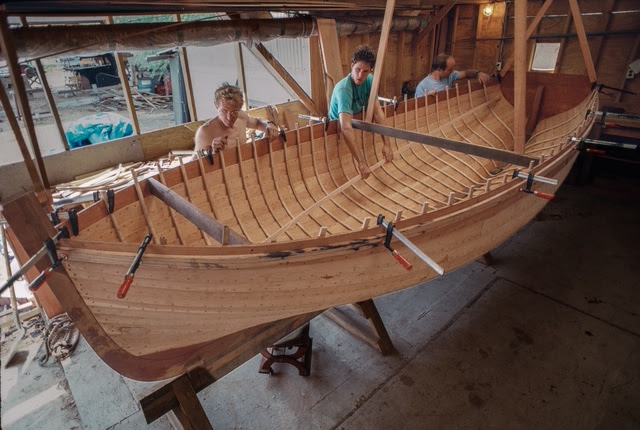
Randy Hanford, Michael Mefferd and Dan Thormann working on the ship's boat. Photo courtesy of Greg Pease Photography.

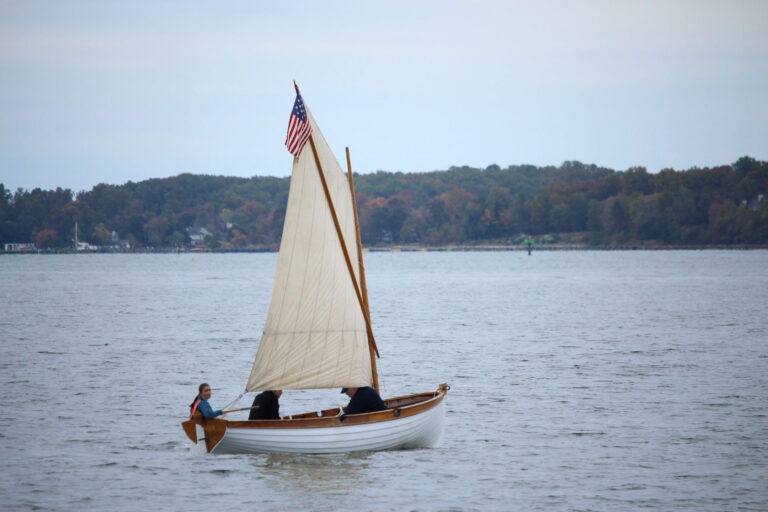
Chasseur, the ship’s boat aboard Pride of Baltimore II, is a clinker-built wooden boat inspired by the traditional fishing and rowing dinghies of the British Isles. When discussing what kind of boat would best serve Pride II’s needs, builder Captain Peter Boudreau had two simple requirements: it had to “look great and row great.”

One detail that makes Chasseur distinctive is that she does not have typical oarlocks. Instead, leather-lined cut outs for the oars are cut directly into the boat’s sheer strake. She also has no centerboard, a deliberate choice made with versatility in mind. This allows her to carry cargo, including drums of oil or water, between ship and shore during excursions to more remote areas.

The historic tall ship Elissa, based in Galveston, Texas, has a small boat of her own that bears a striking resemblance to Chasseur. While the two boats have their differences, their similar designs share a common connection. Both were built by Mike Mefferd.

Before joining the Pride II build team, Mike spent time working on Elissa in Galveston. A graduate of the Apprenticeshop, a boatbuilding school in Maine, he brought his boatbuilding experience to the construction of Chasseur.¹

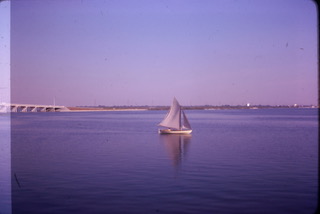
Known as Chasseur, or affectionately nicknamed “Chompers” by the crew in 2016, the boat is equipped with a distinctive spritsail rig. Her sail was made by master sailmaker Nat Wilson from Egyptian cotton, the same material used for Pride II‘s studding sail and ringtail.

Chasseur under sail on the Severn River, 2016. Courtesy of Will Lankford.

And her name? Well, there’s no coincidence there, either. Chasseur is a direct nod to the original ‘pride of Baltimore’, Chasseur, the famous Baltimore Clipper privateer from the War of 1812.

There’s another fun connection to Galveston. In November 1988, during her maiden voyage season, Pride II visited Galveston, Texas. It was there that Pride‘s crew celebrated Thanksgiving alongside the crew of Elissa. Following an event in Houston, Pride II returned to Galveston in early December for Dickens on The Strand, an annual holiday festival that has been held in Galveston for more than 50 years.

There’s even a tale that during one of these visits, the two boats, Chasseur and Elissa‘s boat, raced each other. According to the story, Elissa‘s boat came out on top.

Ship’s Boats of the First Pride

Pete Culler designed small boat on the stern of the first Pride of Baltimore, 1977. Photo courtesy of Townsend Wentz.

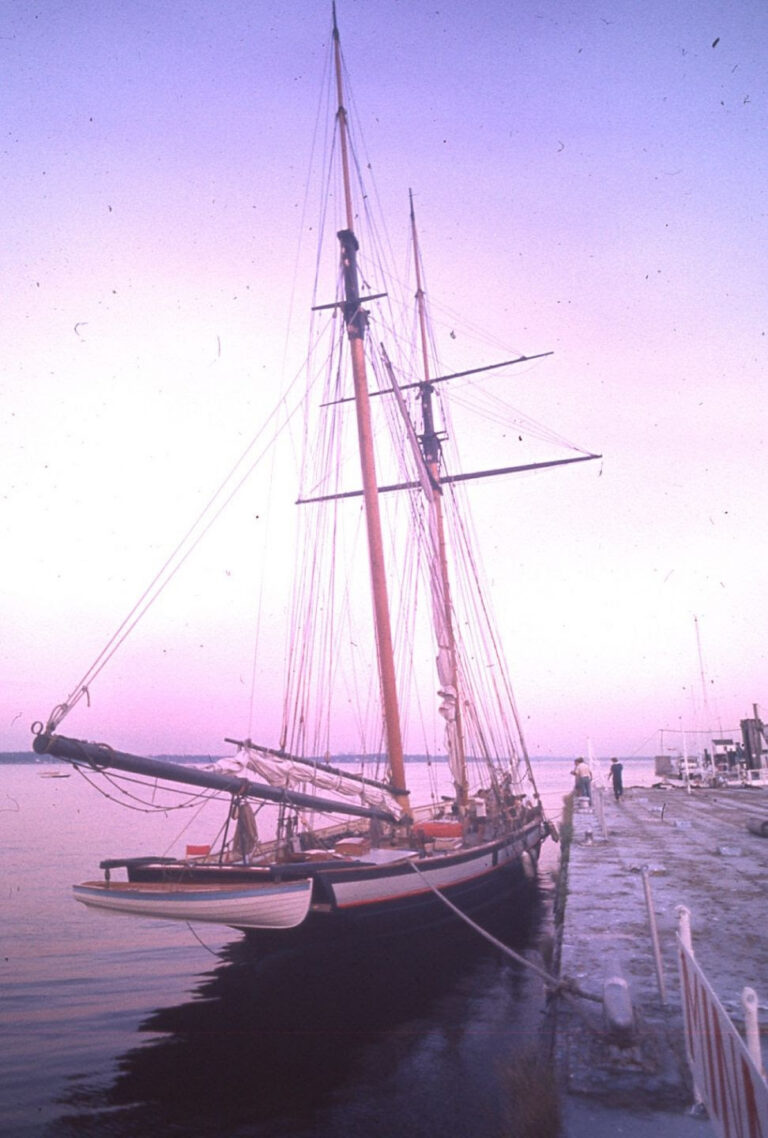
The original Pride of Baltimore relied on a number of small boats during her years at sea.

Her first ship’s boat was a small rowing skiff designed by Pete Culler² and brought aboard by Pride builder and captain, Melbourne Smith. Originally painted white with a blue stripe, the boat was suspended from the stern davits by its boat falls or lashed down atop the davits, depending on conditions.

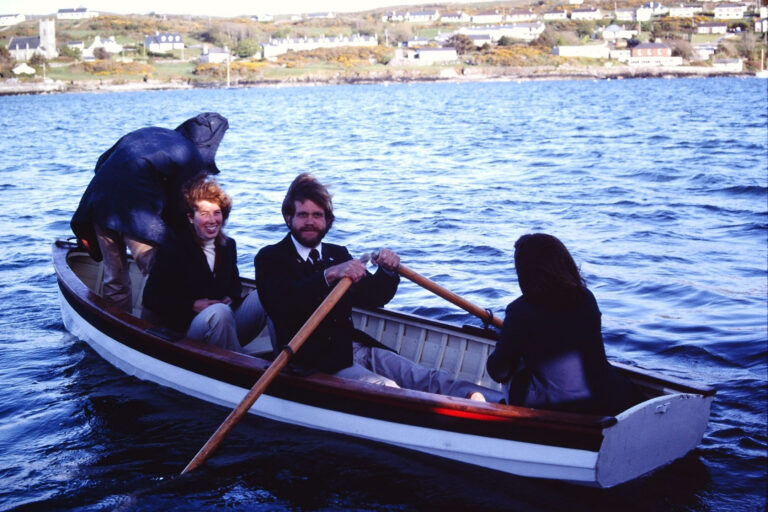
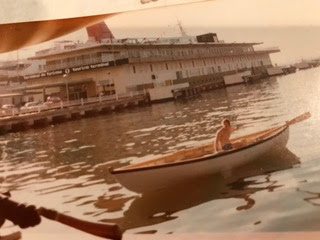
Captain Miles and crew in the 'captain's gig' in Baltimore, Ireland, 1985.

Referred to affectionally as the “Captain’s gig”, it served Pride faithfully. Generally this small boat was for the exlcusive use of the Captain and a “trusted few” according to Peter Boudreau. This boat traveled with Pride from her maiden voyage in 1977 to the West Coast in 1983 and on to Europe in 1985. 

The Bequia Boat 

Bequia Boat Sailing. Courtesy of Peter Boudreau
Bequia boat being worked on by Japheth "Jay" Hazell and Peter Boudreau, along with Pride crew members Richard Cadwalader and Mike Rawl.
Grecian Spirit on the water. Photo courtesy of Peter Boudreau.

In the early years of Pride‘s travels, Baltimore’s Greek community donated funds toward the construction of a larger small boat. The resulting vessel was a Bequia-style double-ender, built by Japheth “Jay” Hazell and Peter Boudreau, both of whom had participated in the construction of Pride of Baltimore, along with Pride crew members Richard Cadwalader and Mike Rawl.

Peter Boudreau refers to her as Grecian Spirit. She was also fitted with a sailing rig. This larger boat was kept on deck.

Unfortunately, Grecian Spirit was lost in Bequia in 1981 during a winter maintenance period.

Irie

Following the loss of Grecian Spirit, a replacement was built. Named Irie, she was the work of Captain Armin Elsaesser, who built her during one of his off-duty stints in Baltimore at the old Light Street Shipyard.

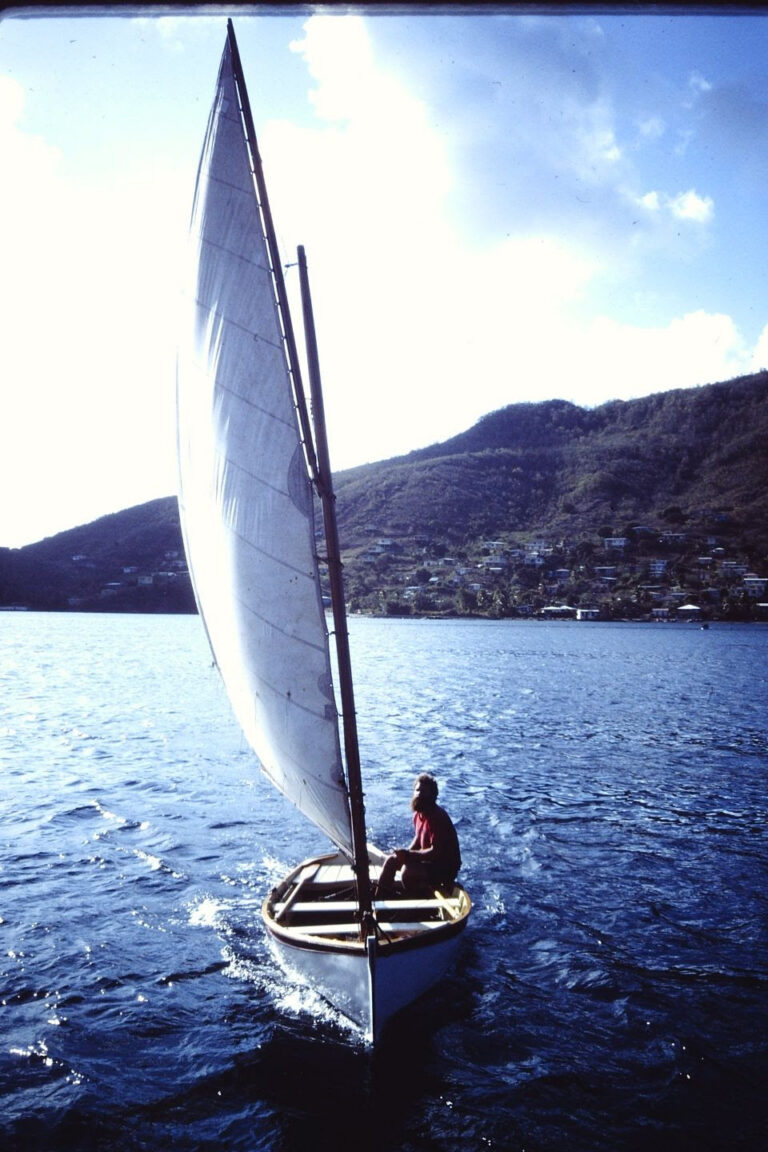
Thomas Gillmer described Irie as a 16½-foot crabbing skiff, fitted with a centerboard and beautiful high-peak gaff sailing rig. She proved a good sailor in the island breezes, and Gillmer praised her “dedicated craftsmanship.”

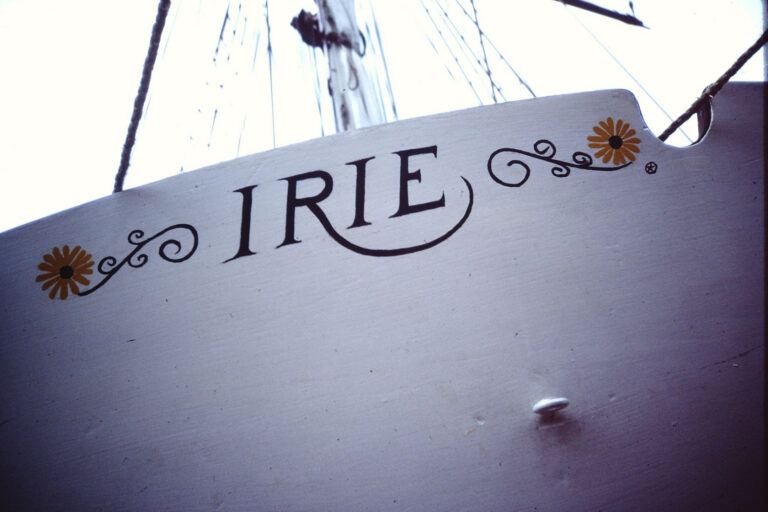
Her name comes from a Jamaican Patois expression meaning “everything is good” or “all right.” It was painted across her stern alongside Black-eyed Susan flowers.

John "Sugar" Flanagan sailing Irie in the Virgin Islands, May 1986.

Whether rowing, sailing, or carrying crew and supplies between ship and shore, small boats have always served an important purpose aboard working vessels. They provided practical support for the ship’s daily operations, but also gave the crew opportunities for recreation and a little time away from the demands of life aboard.

Today, Chasseur carries that history forward. Admired by visitors who come aboard Pride II, she is more than a charming little wooden boat. She represents generations of maritime craftsmanship, ingenuity, and seamanship, traditions that remain alive through the people who build, maintain, and sail vessels like Pride II. As we celebrate 50 years of Pride of Baltimore, even the smallest boat reminds us that preserving our maritime heritage means keeping these skills and stories alive for generations to come.

I hope you are enjoying our ongoing 50 Years of Pride series. 

Stay tuned for part 25! 

Cheers,
Patrick

Bonus Boat: FUBAR MARINE

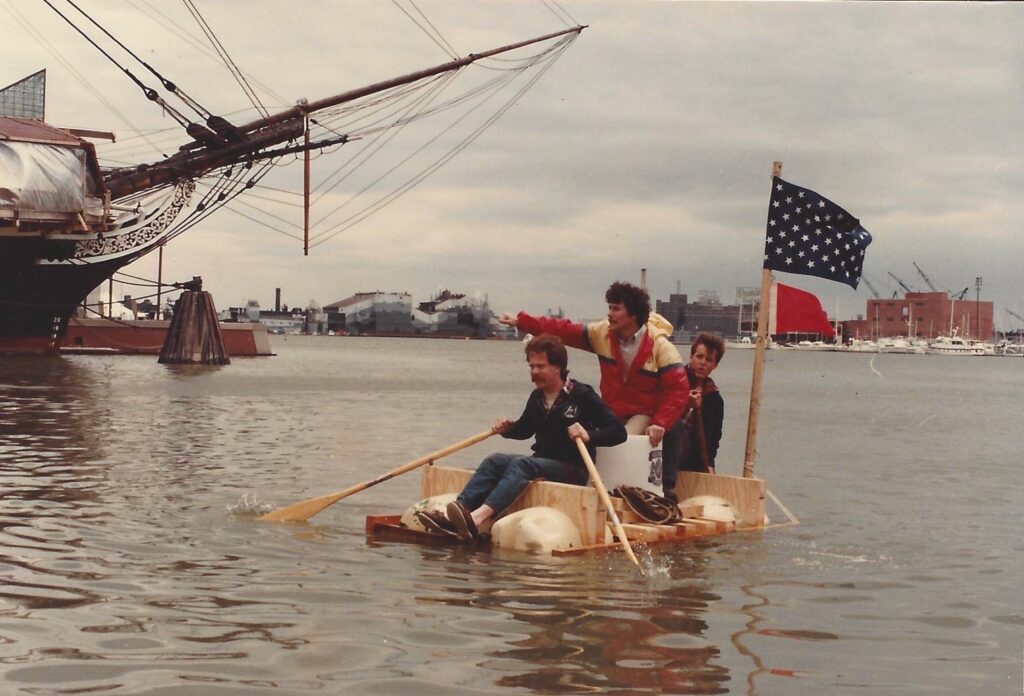
Leroy Surosky, Christopher Rowsom, and Joe McGeady underway in the flagship of "FUBAR MARINE". Photo courtesy of Steve Hyman

Not every boat built by the Pride crew was destined for the history books. This particular creation, courtesy of FUBAR Marine, utilized a National Premium keg holder as a conning tower and a crew confident enough to put it to sea. Leroy Surosky on the oars, Captain Christopher Rowsom in command, and Joe McGeady at the “helm”.

Notes and Sources 

Notes:

¹ Lance Lee and the Apprenticeshop

The Apprenticeshop was founded by educator and boatbuilder Lance Lee in 1972 in Bath, Maine, on the grounds of the Maine Maritime Museum. Lee established the school to revive traditional wooden boatbuilding through hands-on apprenticeship, combining craftsmanship, seamanship, and experiential education.

² Pete Culler

Robert D. “Pete” Culler was an influential American boat designer, builder, and traditional small-craft enthusiast, known for his practical designs inspired by working boats and maritime traditions. His extensive collection of boat designs and plans is preserved at Mystic Seaport Museum in Connecticut.

Sources:

Gillmer, Thomas C. Pride of Baltimore: The Story of the Baltimore Clippers, 1800–1990. Camden, ME: International Marine, 1992.

Pease, Greg. Sailing with Pride. Baltimore, MD: C. A. Baumgartner Publishing, 1990.

Waldron, Tom. Pride of the Sea. New York, NY: Citadel Press, 2000.